

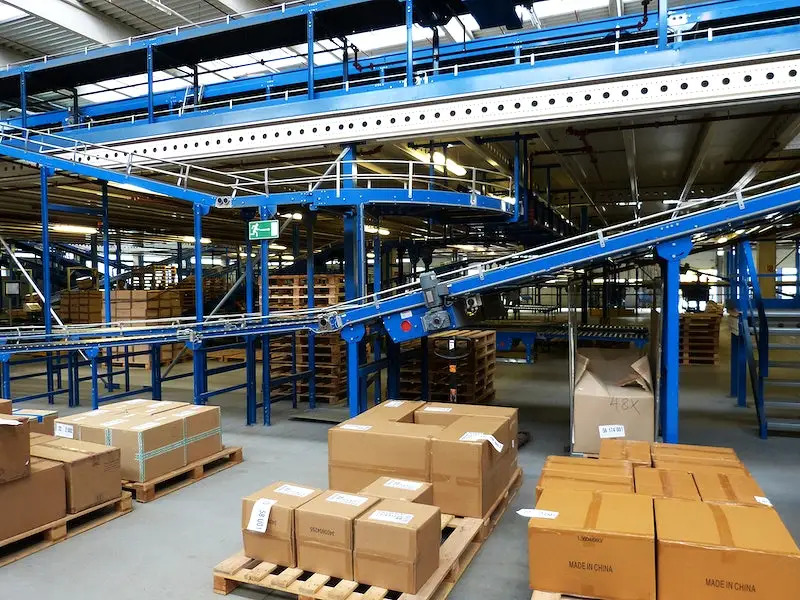
Why industrial automation matters in 2026
Industrial automation helps you make more with less. It cuts costs, speeds up work, and improves quality.
New tools are moving fast. AI, connected sensors, and smart robots are now practical for plants of every size. These changes reach many industries, including:
- Manufacturing
- Logistics
- Healthcare and medical equipment
- Energy
In this article, you will learn five ways automation can boost your production this year.
1. Predictive maintenance with IoT sensors
Predictive maintenance uses IoT sensors to spot wear before a machine fails. The sensors watch your equipment all day, every day.
Sensors can measure:
- Vibration
- Temperature
- Pressure and other key performance indicators (KPIs)
The data shows when a machine is likely to fail. You can then fix it on your schedule, not in a crisis.
The benefits:
- Less unplanned downtime
- Longer machine life
- Steadier production
2. AI and machine learning
In manufacturing, AI and machine learning (ML) analyze plant data to find patterns, predict problems, and guide decisions.
Here is how plants use them:
- Spot failures early. AI reviews sensor data and past repair records.
- Plan production. ML helps you have the right materials at the right time.
- Cut waste. Better planning means less scrap and idle time.
3. Collaborative robots (cobots)
Cobots are robots built to work safely next to people. They take on jobs that are risky, heavy, or repetitive.
Common cobot tasks include:
- Assembly
- Welding
- Lifting heavy loads
Cobots don’t get tired. That frees your team to focus on skilled work. The result is a safer and more productive floor.
Cobots vs. traditional industrial robots
|
Feature |
Cobots |
Traditional robots |
|---|---|---|
|
Works next to people |
Yes, designed for it |
Usually behind guards or fences |
|
Typical tasks |
Assembly, light welding, machine tending |
High-speed, heavy, high-volume work |
|
Setup and changeover |
Often quick; many can be hand-guided |
Usually needs specialist programming |
|
Best fit |
Flexible, mixed production |
Fixed, repeatable production lines |
4. Digital twins
A digital twin is a virtual copy of a machine, process, or system. Live sensor data keeps it up to date.
With a digital twin, you can:
- Test changes without stopping real production
- Try “what if” scenarios safely
- Find issues before they happen
5. Cybersecurity and data protection
Industrial cybersecurity protects connected machines, networks, and data from attacks. Every new device can be a door for cyber threats.
Key steps to protect your plant:
- Build a secure network design
- Install updates and patches on time
- Use strong logins and access controls
- Follow data rules that apply to you, such as GDPR and CCPA
Good security protects your operations. It also keeps your customers’ trust.
Preparing your workforce
New technology needs new skills. Your team will need training to run and maintain these systems.
This shift creates new chances for growth:
- Training programs for current staff
- New technical roles on the plant floor
- Better, safer jobs for skilled workers
The bottom line
The future of industrial automation is bright. These five tools can help you raise efficiency, quality, and output:
- IoT sensors for predictive maintenance
- AI and machine learning
- Collaborative robots
- Digital twins
- Strong cybersecurity
Adopt them now to stay ahead of the competition.
Frequently asked questions
How does industrial automation increase production? It reduces unplanned downtime, speeds up repetitive tasks, and cuts errors and waste. Data from connected machines also helps teams plan better.
What is industrial automation? It is the use of computers, sensors, and machines to run industrial processes with less manual work.
What is predictive maintenance? It uses sensor data to predict when equipment will fail. You can then fix it before it breaks.
How are cobots different from traditional robots? Cobots are designed to work safely next to people. Traditional industrial robots usually work behind guards.
What is a digital twin? It is a virtual model of a real machine or process. It updates with live data so you can test changes safely.
Why is cybersecurity important in industrial automation? Connected machines can be targets for cyber attacks. A breach can stop production, damage equipment, or expose data.
What hardware does industrial IoT need? Industrial IoT needs sensors, network gear, and rugged computers that collect and process data at the edge. These computers must handle heat, dust, vibration, and long service lives.
Who is Corvalent? Corvalent is an industrial computing manufacturer based in Cedar Park, Texas. It builds industrial computers and CorGrid IoT software for medical, defense, energy, semiconductor, and industrial automation customers.
You may also like: Industrial Hardware | Corvalent
Ready to upgrade your operations?
From medical equipment to defense systems, Corvalent builds rugged industrial computers in the USA. Our solutions are built for:
- Customization
- High performance
- Long product life
Join industry leaders who trust Corvalent’s 33 years of experience. Request a quote or technical information today.